


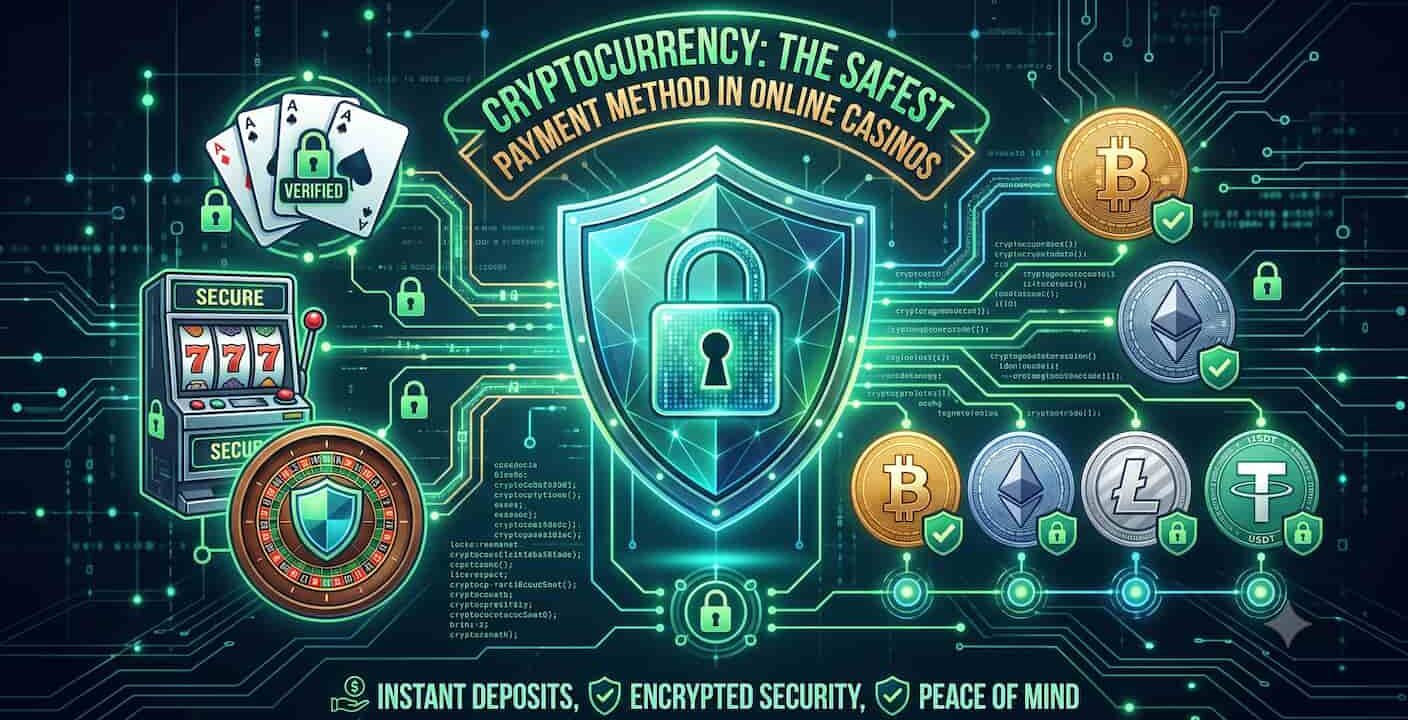

If you’ve tried to fund an online casino account from Kuwait, you already know the drill: KNET typically doesn’t work on gambling platforms, and card payments can run into declines the moment the merchant category reads as online gaming. Cryptocurrency skips that friction entirely, and for a growing number of Kuwaiti players, it has become the safest payment method for Kuwaiti players, not just the easiest workaround for a banking system that was never built with gambling in mind. The reasons go beyond convenience, and they’re worth understanding before you decide how to fund your own account.
How Crypto Deposits Actually Work at an Online Casino
Before looking at what makes crypto more secure, it helps to walk through what actually happens between your wallet and the casino’s cashier.
Choose your cryptocurrency
Pick a cryptocurrency such as Bitcoin, Ethereum, or a stablecoin like USDT.
Get the casino’s wallet address
The casino generates a wallet address for you to send funds to. Behind that address sits a pair of cryptographic keys: a public key the casino can see, and a private key that only you control.
Send the payment
Send the payment from your wallet. Thousands of independent computers spread across the network, not a single bank or processor, verify the transaction.
Wait for network confirmation
Once verified, the transaction is added permanently to a shared ledger.
See the deposit in your balance
Once confirmation clears, the deposit shows up in your casino balance, usually within minutes rather than days.
What Makes Crypto the Safest Payment Method for Kuwaiti Players
Speed is a nice bonus, but the real reason crypto has earned trust among cautious players comes down to how the technology is built and who gets removed from the transaction entirely.
A Record That’s Nearly Impossible to Alter
Every crypto transaction gets written into a ledger held by thousands of computers at once instead of a single company’s database. That structure makes it extremely difficult for anyone, including the casino, to quietly edit a transaction after the fact, since doing so would mean rewriting the same record across every copy simultaneously. For a player, this means your payment is either fully confirmed on the network or it isn’t. There’s no ambiguous middle ground where money can vanish from one ledger but not another.
No Bank Standing Between You and the Casino
Kuwaiti banks and KNET are built around merchant-category filtering that treats online gambling as high-risk, which is why deposits routinely get frozen, reversed, or rejected before they ever reach the casino. Crypto transactions move directly from your wallet to the casino’s wallet, with no bank in the middle applying that filter. That also means no surprise account freeze over a gambling-related charge on your statement, and no time spent on hold explaining a payment you already made.
No Chargebacks to Exploit, in Either Direction
Card payments can be reversed weeks after the fact through a chargeback, which sounds player-friendly until you consider how often it’s abused to defraud operators, and how often legitimate players get caught up in the fraud reviews that follow. Crypto transactions are final the moment they confirm on the network. That finality cuts both ways. It protects licensed casinos from chargeback fraud, which keeps the reliable ones financially stable, but it also means you need to be certain of the wallet address and the amount before you hit send, because there’s no bank to call afterward.
More Privacy Around Your Gambling Activity
A wallet address doesn’t carry your name, and a crypto deposit won’t show up as a line item labeled with a casino’s name on a bank statement your family or employer might see. You’re still identifiable to the casino itself through account verification, but the money movement leading up to that point is far more private than a card transaction logged with a merchant name attached to it.
Which Cryptocurrencies Kuwaiti Players Actually Use
Not every coin behaves the same way at a casino cashier, and the right pick usually comes down to what you’re optimizing for: speed, low fees, or price stability.
| Cryptocurrency | Best For | Worth Knowing |
|---|---|---|
| Bitcoin (BTC) | Widest acceptance across licensed crypto-friendly casinos | Network fees and confirmation times can climb when the network is busy |
| Ethereum (ETH) | Faster confirmations and support for provably fair games built on smart contracts | Price moves roughly as much as Bitcoin, so your balance shifts in value while you play |
| Stablecoins (USDT, USDC) | Keeping your bankroll’s value steady, since it’s pegged to the US dollar | Depends on the issuer actually holding the reserves backing each coin |
Why This Matters More for Mobile-First Kuwaiti Players
Most Kuwaiti players have never set foot in a land-based casino and manage almost everything, banking included, from a phone. That habit makes the friction around KNET and blocked card payments feel less like a minor inconvenience and more like the single biggest obstacle standing between wanting to play and actually being able to.
A crypto wallet app fits that mobile-first routine the same way a banking app does: open it, paste an address, confirm, and the deposit is already moving. For players used to instant transfers through their phone for everything else, waiting days for a bank wire to clear, or discovering a card payment silently failed, feels like a step backward rather than a safety measure.
The Trade-offs You Should Weigh Before Depositing
Crypto’s safety advantages don’t cancel out its risks, and a fair look at the topic means naming them plainly rather than glossing over them.
- Irreversibility cuts against you too. Send funds to the wrong address, or on the wrong network, and they’re gone for good. Triple-check the address and the coin’s network before you confirm anything.
- Volatility is real unless you’re using a stablecoin. Deposit in Bitcoin or Ethereum, and a price swing before you cash out changes what your winnings are actually worth.
- Self-custody means no safety net. There’s no password reset for a lost seed phrase, and no customer support line if you send funds from an exchange account that later flags and freezes it for gambling-related activity.
- A secure payment method doesn’t vet the operator for you. Crypto being safe to send doesn’t make the casino receiving it trustworthy. That still comes down to licensing, a track record with real players, and transparent withdrawal terms — the same checks worth running no matter how you plan to pay.
How to Deposit and Withdraw Crypto Safely
A handful of habits separate players who use crypto without incident from the ones posting withdrawal horror stories on complaint forums.
- Use a private wallet you control rather than sending straight from an exchange account. Exchanges can flag gambling-related withdrawals and freeze accounts without warning.
- Send a small test deposit, then request a small withdrawal before moving your full bankroll, to confirm the casino pays out the way it claims to.
- Stick to casinos that are actually licensed. A secure payment rail on an unlicensed site still leaves you exposed to withheld winnings.
- Turn on two-factor authentication for both your wallet and your casino account, and never store your seed phrase anywhere connected to the internet.
- Double-check the network before every transaction. Sending USDT on the wrong blockchain is one of the most common ways players lose funds permanently, and it has nothing to do with the casino’s security.
Frequently Asked Questions
Is it legal for Kuwaiti players to use cryptocurrency at online casinos?
Kuwait doesn’t license or regulate online gambling domestically, so the legal picture depends on personal circumstances and the jurisdiction where the casino itself holds its license. Owning or using cryptocurrency isn’t illegal in Kuwait on its own. This isn’t legal advice, and players should treat the decision to gamble online as one made with awareness of local rules rather than something an article can settle for them.
Why doesn’t KNET work for online casino deposits?
KNET is built around domestic merchant categories, and online gambling almost always falls outside what participating banks are willing to authorize. That gap is exactly why crypto and select e-wallets have become the practical route for Kuwaiti players, rather than a lifestyle preference.
Do I need to already own crypto before I can deposit at a casino?
No. Most players buy Bitcoin, Ethereum, or a stablecoin through an exchange first, move it into a private wallet they control, and send it to the casino from there. Buying crypto directly through the casino’s own cashier usually isn’t an option.
What happens if I send crypto to the wrong wallet address?
In almost every case, the funds are unrecoverable. Blockchain transactions can’t be reversed once confirmed, which is exactly why double-checking the address and the network before sending matters more here than it does with a bank transfer.
Is Bitcoin safer than a stablecoin for casino deposits?
They’re safer in different ways. Bitcoin has the widest support and the deepest liquidity of any crypto option at online casinos, while a stablecoin protects your bankroll from price swings while you play. Neither is inherently riskier from a security standpoint. The choice mostly comes down to whether you want your balance to move with the market or stay flat.