



In the 2022 World Cup, 52% of group-stage matches finished with two goals or fewer. That single statistic explains why over/under betting is one of the most popular markets at a tournament where cautious tactics and mismatched opponents are common. This guide breaks down how over/under betting works, which lines matter most, and how to use the market effectively across the 104 matches of the 2026 World Cup.
What Is Over/Under Betting?
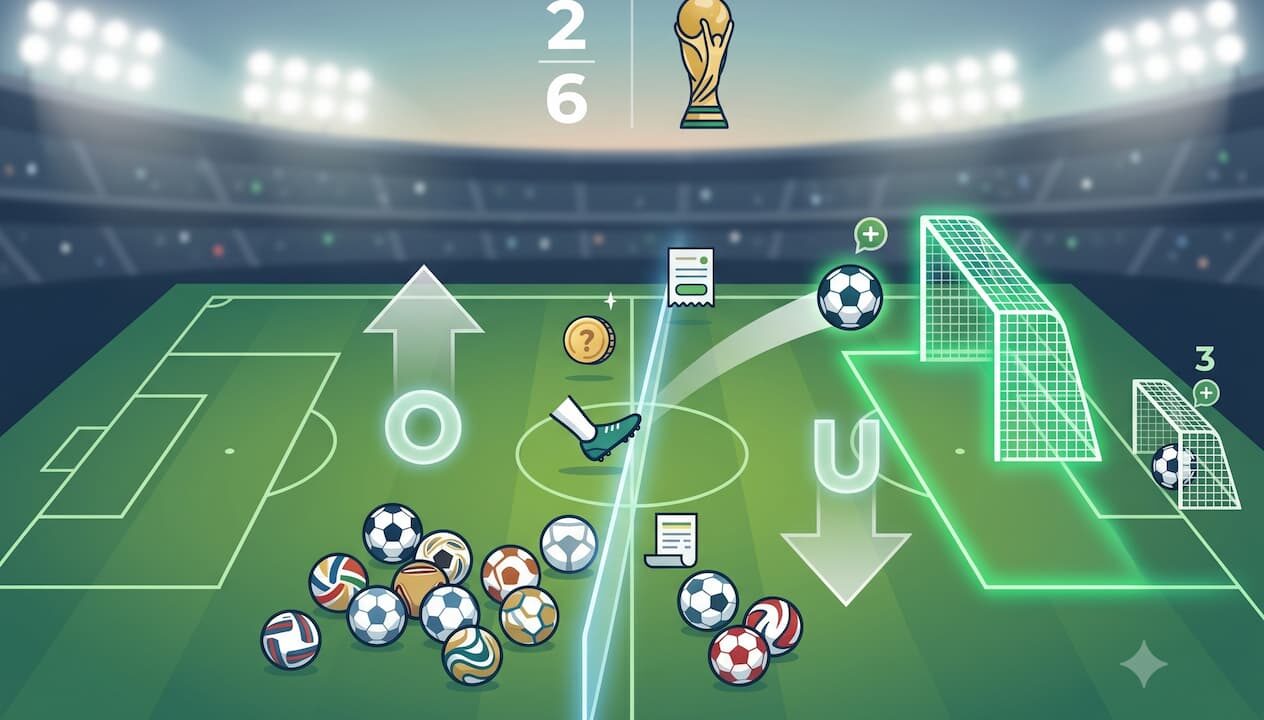
Over/under betting is a wager on the total number of goals scored in a match, not on which team wins. The bookmaker sets a line, and you bet on whether the actual total will be over or under that number.
The most common line is 2.5 goals. A bet on Over 2.5 wins if three or more goals are scored. A bet on Under 2.5 wins if two or fewer goals are scored. The 0.5 decimal is used deliberately so there is never a push (a result exactly on the line); every bet produces a winner or a loser.
Other common lines at the World Cup include 1.5, 3.5 and occasionally 4.5, depending on the fixture. A match between France and Norway, for example, might offer Over 2.5 at similar odds to Under 3.5 — two different ways of expressing expectations around the same match.
The Key Lines Explained
Over/Under 1.5
Under 1.5 wins if the match finishes 0-0 or 1-0 to either side. It is a defensive bet, suited to fixtures where both teams are likely to prioritise not losing. Over 1.5 wins if there are two or more goals, which happens in the vast majority of football matches. The odds on Over 1.5 are typically short for this reason.
Over/Under 2.5
The most widely used line. Over 2.5 needs three or more goals; Under 2.5 needs two or fewer. At the 2022 World Cup, the average number of goals per match was 2.69, meaning the Over and Under were almost evenly split. Group-stage matches tend to come in slightly lower on average than knockout rounds.
Over/Under 3.5
A bet for matches where you expect a high-scoring game. Over 3.5 needs at least four goals, which happens in fewer than 20% of World Cup matches historically. Under 3.5 wins most of the time, so the odds are correspondingly short. Over 3.5 makes sense when a heavy favourite faces a weak side and is highly motivated to score.
Over/Under Stats at Recent World Cups
| Tournament / Stage | Avg goals/match | Under 2.5 hit rate |
|---|---|---|
| WC 2022 — overall | 2.69 | approx. 52% |
| WC group stages (last 5 editions) | ~2.6 | ~55% |
| WC knockout rounds (last 5 editions) | ~2.8 | ~45% |
The group stage consistently produces more conservative football than the knockout rounds. Teams in the early matches tend to prioritise not losing, particularly in the first fixture of the group when a defeat would be damaging. The expanded 2026 format with 12 groups of four does not change this dynamic significantly; if anything, the third-placed qualification route gives some teams less reason to attack aggressively when a draw is enough to stay in contention.
How the 2026 Format Affects Over/Under Markets
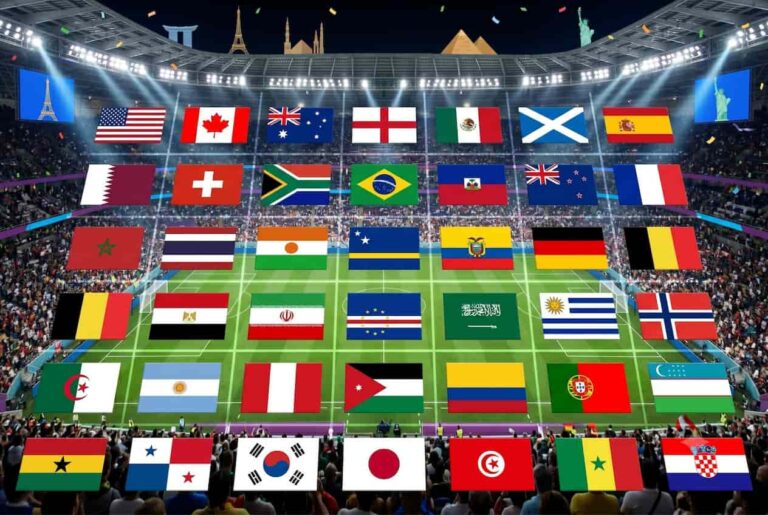
The new 48-team format introduces some specific situations worth understanding before placing over/under bets.
More mismatches in the group stage
With 48 teams, the quality gap between the strongest and weakest sides in some groups is larger than at previous World Cups. When a top-ranked team plays a significant underdog, Over 2.5 and Over 3.5 markets can offer real value. The stronger side typically has both the motivation and the ability to score multiple goals, while the underdog may be exposed defensively.
Third-place qualification changes final-round dynamics
Because the eight best third-placed teams qualify for the Round of 32, the final group-stage matchday can produce unusual tactical situations. A team sitting third that knows a draw is enough to progress may show little ambition to attack. In these matches, Under 2.5 tends to attract interest. Look at the group standings before the third matchday to identify these scenarios.
Knockout rounds: tighter matches, fewer goals
Historically, knockout rounds produce slightly more goals per game than the group stage, but the margin is narrow. The real difference is variance: knockout matches are won on fine margins, and teams with defensive discipline can drag games to 0-0 or 1-0 in a way that is less likely in the group stage. Under 2.5 is competitive in many knockout fixtures, particularly from the quarter-finals onwards.
Practical Examples: When to Bet Over and When to Bet Under
| Match type | Likely market angle | Reasoning |
|---|---|---|
| France vs Norway (Iraq’s group) | Over 2.5 | France’s attacking output; Norway attack-minded |
| Two defensive lower-ranked sides | Under 2.5 | Low goal expectancy; cautious early group play |
| Saudi Arabia vs Spain | Over 2.5 | Spain high scoring; Saudi need to attack |
| Final-stage group match (both need a draw) | Under 2.5 | Both teams may settle; incentive to avoid risk |
These examples are illustrative rather than tips. The point is that over/under betting is most useful when you have a specific reason to believe in the goals total, not as a default alternative to the match winner market.
Over/Under Betting vs Other Markets
One of the appeals of over/under betting is that you do not need to predict the result — only the total goals. This makes it useful in two specific scenarios.
First, when you have a view on the style of play but not the winner. If you think France and Norway will produce an open, high-tempo match, Over 2.5 captures that view regardless of which side wins. Second, when the match winner market is unattractive. Short odds on a heavy favourite can be poor value; the goals market sometimes offers better-priced options for the same underlying view.
Over/under is also more resilient to late tactical changes than match-winner bets. A team that starts conservatively but goes behind and starts attacking still benefits an Over bet. Momentum swings, substitutions and red cards all tend to produce more goals rather than fewer.
Bet on World Cup Over/Under at Betfinal
Betfinal covers all 104 matches of the 2026 World Cup with over/under markets across multiple lines. Every bet you place earns points on the $25,000 Leaderboard, including losing bets, so even Under bets that just miss contribute to your tournament total.
The Early Settlement offer is worth keeping in mind on over bets specifically: a 3-0 lead triggers an immediate payout even if no further goals are scored. Place your World Cup bets at Betfinal and earn points for the $25,000 Leaderboard throughout the tournament.
See our full Betfinal World Cup 2026 review or visit Betfinal’s World Cup promotions page for all available markets.
Frequently Asked Questions
What does Over 2.5 goals mean?
Over 2.5 means you are betting that three or more goals will be scored in the match. If the final score is 2-1, 3-0, 2-2 or any result with three or more total goals, the bet wins. If the score is 1-0, 1-1 or 2-0, the bet loses.
What does Under 2.5 goals mean?
Under 2.5 means you are betting that two or fewer goals will be scored. A final score of 0-0, 1-0 or 1-1 all win. Any result with three or more goals loses.
Is Over or Under more common at the World Cup?
Based on recent World Cups, Under 2.5 lands in roughly 52-55% of group-stage matches. The overall average is close to 2.7 goals per game, which puts results near the 2.5 line. Neither side dominates strongly, which is why the odds are typically close to even.
Can you bet over/under on individual halves?
Yes. Most bookmakers offering over/under markets will also provide half-time lines, typically Over/Under 0.5 or 1.5 for the first half. First-half under markets can offer value in World Cup matches where teams tend to start cautiously.
Does extra time count for over/under bets?
This depends on the bookmaker. Most over/under bets at the World Cup are settled on 90 minutes plus injury time only, not extra time or penalties. Check the terms before placing a bet on a knockout match that may go to extra time.
Last updated: June 2026