



When you open an online casino site as a player in Kuwait, you’ll usually spot a badge near the footer: Curaçao, sometimes Malta, occasionally both mentioned across different brands you’re comparing. That badge is doing less work than it looks like it’s doing. It tells you which foreign authority licensed the operator. It says nothing about whether that license protects you specifically, or whether using the site is even permitted from where you live. Understanding offshore gambling licenses in Kuwait starts with separating those two questions before judging any single site.
Three Things That Are Not the Same Question
Before comparing regulators, it helps to pull apart three things people tend to blend into one:
- Whether the operator is in good standing with the authority that licensed it.
- Whether the site loads and accepts registrations from Kuwait.
- Whether a Kuwaiti player actually has any legal cover for using it.
A site can score well on the first two and still leave the third completely unanswered. Kuwait doesn’t license or regulate gambling in any form, so no foreign badge substitutes for something that doesn’t exist locally. Seeing “Kuwait” in a dropdown menu at sign-up isn’t a green light from anyone, and a company registered somewhere doesn’t automatically mean it holds a current gaming license at all.
Recommended For You
Our Pick of Licensed Online Casinos
Vetted for valid licensing and player protection

 American Express
 Cryptocurrency
 Jeton
Jeton
 Mastercard
 MuchBetter
 Skrill
 SticPay
 Visa
Visa
 Voucherry
 Wire Transfer
 Cryptocurrency
Voucherry
Cryptocurrency
Voucherry
 American Express
Cryptocurrency
American Express
Cryptocurrency
 ecoPayz
Jeton
Mastercard
MuchBetter
SticPay
Visa
Voucherry
ecoPayz
Jeton
Mastercard
MuchBetter
SticPay
Visa
Voucherry
 Cryptocurrency
Mastercard
Cryptocurrency
Mastercard
 Neteller
 PaysafeCard
Skrill
Visa
PaysafeCard
Skrill
Visa
Curaçao Rebuilt Its Entire System From Scratch
For most of the past three decades, a Curaçao license meant something quite different than it does today. A small group of private companies held the only master licenses the island issued, then sold sub-licenses to operators with comparatively light oversight attached. That structure is what made Curaçao both famous and cheap among operators, in roughly equal measure, and it’s also what eventually forced the island’s hand.
In 2020, as a condition attached to pandemic-era financial relief, the Netherlands required Curaçao to overhaul how it regulated online gambling. The plan took years to draft and pass through parliament.
Curaçao’s legislature approved the new National Ordinance on Games of Chance, referred to across the industry as the LOK, by a 13-6 vote in December 2024.
Under the LOK, the Curaçao Gaming Authority, or CGA, issues licenses directly, with no master-licensee sitting in between. By the time the reform passed, roughly 220 direct licenses had already been granted during the transition window, with the regulator expecting somewhere around 600 companies to hold full authorization by the end of the first quarter of 2025. Old sub-licenses expired on schedule once the law took effect, and the master-license model that defined Curaçao for decades is gone for good.
What this means for a Kuwaiti reader is fairly specific. A current, verifiable Curaçao license confirms the operator has actually been through a direct vetting process, something the old sub-license system never required in practice. What it doesn’t mean is that the system behind it is fully mature yet. In October 2025, the CGA’s entire supervisory board resigned amid a government transition on the island. The regulator said its licensing and enforcement work continued without interruption throughout, but the episode was a reminder that a framework this new is still finding its footing operationally.
Malta Has Three More Decades of Practice
The Malta Gaming Authority, established back in 2001, is the older of the two regulators by a wide margin, and its rulebook reflects that history. Licensees are required to keep player funds segregated from the company’s own operational funds, a rule Malta has enforced for years, well before Curaçao had any direct licensing system worth comparing it to.
Malta also asks more of operators once they’re already licensed, not just at the application stage. Its Player Protection Directive requires consumer-facing operators to monitor specific markers of problem-gambling behaviour, deposit patterns among them, using either analytics tools or trained staff watching the accounts. Malta’s enforcement record is also public in a way that’s still new territory for Curaçao: the MGA’s own annual report for 2021 recorded seven license cancellations that year with no suspensions at all, down from fourteen cancellations and three suspensions the year before.
None of this makes Malta’s oversight flawless, and it’s worth saying plainly. That same period saw Malta placed on the Financial Action Task Force’s so-called grey list over gaps identified in its anti-money-laundering controls, a reminder that even a long-established regulator answers to bigger international standards it doesn’t fully control.
There’s also a legal wrinkle worth knowing about before assuming Malta settles every question. Malta has passed legislation, widely referred to in industry coverage as Bill 55, intended to shield Malta-licensed operators from foreign court judgments arising out of gambling disputes, on the argument that Maltese law should govern once an operator is properly licensed there. Several other EU states have pushed back hard against this approach. For an individual player, the legal argument itself matters less than the practical effect: a Malta license can complicate rather than simplify any attempt to pursue a dispute through courts outside Malta.
Curaçao and Malta, Side by Side
The table below sets out the practical differences a Kuwaiti reader is likely to actually care about.
| Factor | Curaçao (CGA) | Malta (MGA) |
| Direct licensing since | December 2024 | 2001 |
| Structure | Single-tier, licensed directly by the CGA | Single-tier, licensed directly by the MGA |
| Fund segregation | Required under the LOK, still bedding in | Required and audited for well over a decade |
| Complaints route | Operator first, then the CGA; formal ADR still developing | Operator first, then a mandatory certified ADR body |
| Public register | Official CGA database | Official MGA database |
| Track record | Still being built | Documented since the early 2000s |
The honest summary sits somewhere in the middle. Malta’s system is older and its complaints process more tested against real disputes. Curaçao’s system is newer, holds operators to a genuine vetting bar for the first time in its history, and is still working through some of the operational kinks that come with any regulator this young. Neither one guarantees a player wins a dispute, and neither changes anything about the law in Kuwait itself.
What a License Actually Requires of an Operator
A valid license from either authority generally obliges the operator to:
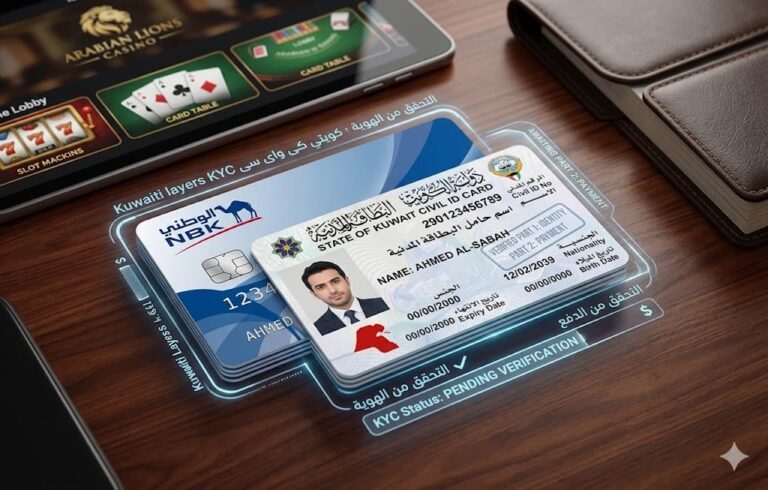
- Verify player identity and age before real-money play begins
- Run anti-money-laundering checks across deposits and withdrawals
- Submit to some form of independent game-fairness testing
- Publish clear terms alongside a working complaints procedure
- Offer at least basic responsible-gambling tools to players who want them
What a license does not do matters just as much. It doesn’t guarantee a fast payout. It doesn’t guarantee any individual dispute resolves in the player’s favour. It doesn’t stop an operator from later running into financial trouble or shutting down altogether. And for a player based in Kuwait specifically, it doesn’t create any legal status whatsoever. Both regulators can suspend or revoke a license when they find a real breach, but that authority moves on the regulator’s own timeline, never the player’s.
How to Actually Verify Offshore Gambling Licenses in Kuwait
Most of the real verification work happens away from the casino’s own website, not on it, which is exactly why so many players skip it.
- Find the operator’s full legal company name, usually buried somewhere in the terms and conditions or the site footer.
- Note down the license number displayed on the page.
- Open the regulator’s official public register directly, typed into the browser yourself rather than clicked through from a badge on the casino’s homepage.
- Search for the company name or license number in that register.
- Confirm the domain you’re actually using matches the domain listed against that license record.
- Check the license status shown in the register: active, suspended, or expired.
- Check exactly what the license covers, since some licenses apply only to B2B software supply rather than the consumer-facing casino a player actually uses.
A handful of signs tend to point the other way. A regulator logo sitting on the page with no working link behind it at all. A license number that returns nothing when searched in the official register. A legal entity name in the footer that doesn’t match the name that appears on the payment or withdrawal page. Any claim to be “licensed internationally,” which isn’t a real category recognised by any regulator. And pressure to deposit before identity verification has finished, when both Curaçao and Malta require that check to happen first, not after.
Frequently Asked Questions
Does a Curaçao license make an online casino legal in Kuwait?
No. A Curaçao license, even the current direct CGA version, only governs the operator’s standing with that particular regulator. It has no connection to Kuwaiti law at all, and using a Curaçao-licensed site from inside Kuwait doesn’t create any local legal status for the player using it.
Is a Malta-licensed casino automatically safer than a Curaçao-licensed one?
Generally more tested, though not automatically safer in every case. Malta’s system carries three decades of enforcement history and a documented, mandatory complaints process, while Curaçao’s direct-licensing system only began operating in December 2024. Neither track record guarantees a good outcome in any specific individual dispute.
How do I check whether a casino’s license number is genuine?
Go directly to the regulator’s own public register, typed into your browser rather than clicked from a badge on the casino’s site, and search the license number or company name there yourself. Confirm the domain matches what’s listed against that record, and that the status shows active rather than suspended or expired.
Does having a license guarantee I’ll get paid if I win?
No. A license requires an operator to maintain fair-game testing and a working complaints procedure, but it doesn’t guarantee payout speed or the outcome of any particular dispute. Delays, extra verification requests, and unresolved complaints can still happen at operators that hold a fully valid license.
What can I actually do if I have a dispute with an offshore casino?
Start with the operator’s own support and complaints channel, in writing, attaching account details and screenshots where relevant. If that doesn’t resolve things, escalate to the regulator itself: Malta requires access to a certified alternative dispute resolution body, while Curaçao’s equivalent process is still developing under the LOK. Neither route can guarantee the outcome a player is hoping for.